
RESOURCES
for occupational therapists
Are you an OT looking for nature-based design support?
Working on adapted homes means making decisions that go far beyond layout and function, and the incorporation of biophilic principles takes on a profound significance. You’re shaping environments that influence how your client moves, feels, rests, and connects every single day.
These resources are designed to make that step easier when it comes to translating clinical insight into real design decisions.
Use it to:
Identify your client’s sensory needs and pair them with interior choices that support and complement their expectations.
Confidently collaborate on home adaptations and new builds with clients not ready to give up on aesthetic preferences.
Get a head start on those “where do we even begin?” moments—with a flexible, structured tool that keeps clients engaged.
Confidently contribute to design conversations — without needing to become a designer.
BIOPHILIC DESIGN STARTER PACK
You already bring deep insight into your clients’ lives, their routines, challenges, support systems, and sensory needs. These tools simply help you bring that knowledge into the physical environment in a way that feels intentional, not overwhelming.
This free guide was designed to sit right beside your clinical tools. It introduces biophilic design as a flexible, sensory-aware toolkit, not a rigid style or aesthetic.
You’ll find real-life strategies to:
Tailoring interiors to match sensory profiles (low, medium, high)
Use biophilic design as a creative scaffold
Confidently communicate suggestions to implement biophilic design elements
Explore a real-life case study
Language to communicate ideas clearly with clients and project teams
The goal is simple: To help you contribute to spaces that feel easier to live in - not just easier to use.
SUPPORTING FREE resources
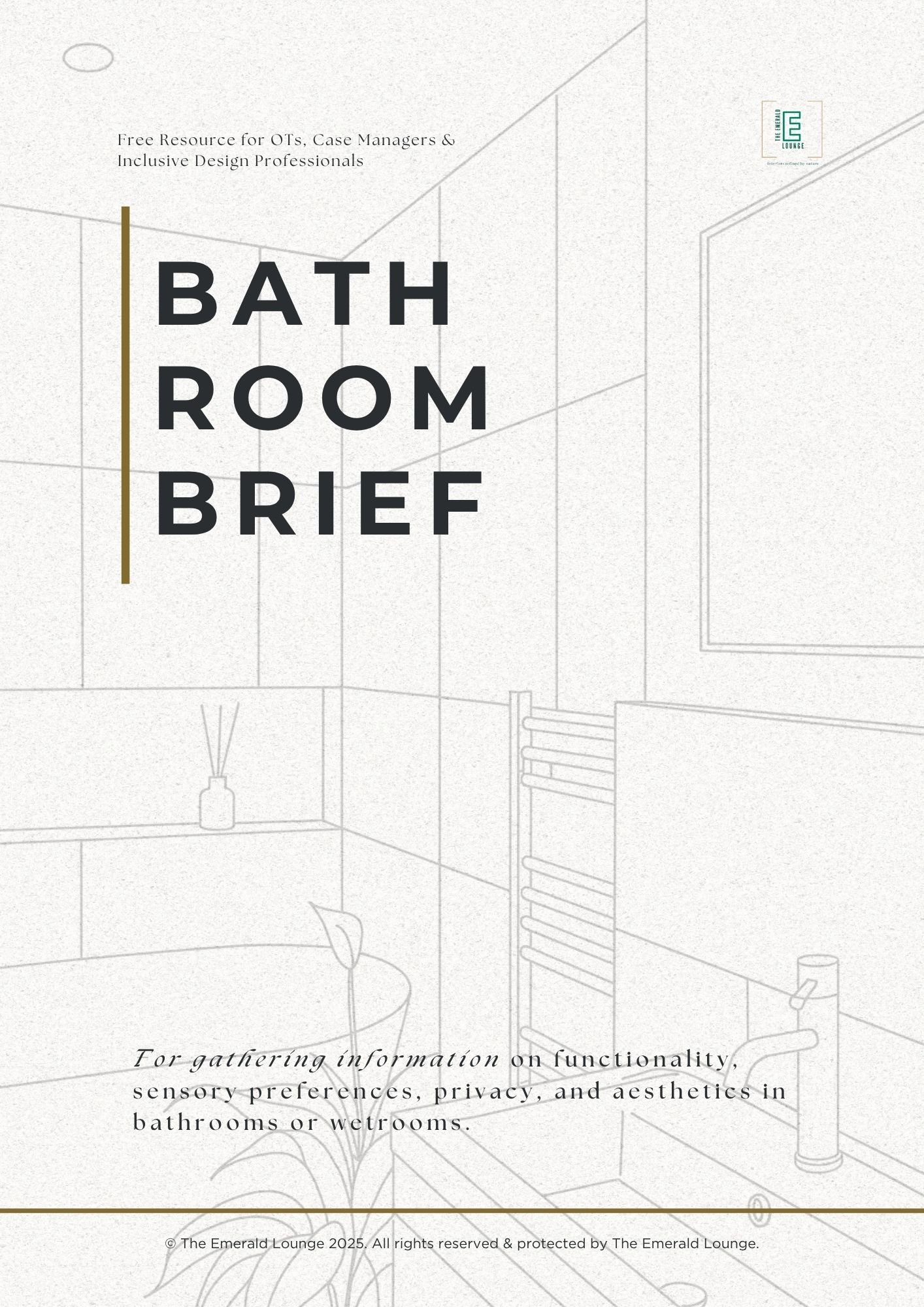
Supports:
functionality and accessibility decisions
sensory comfort in high-use environments
clarity around privacy and safety
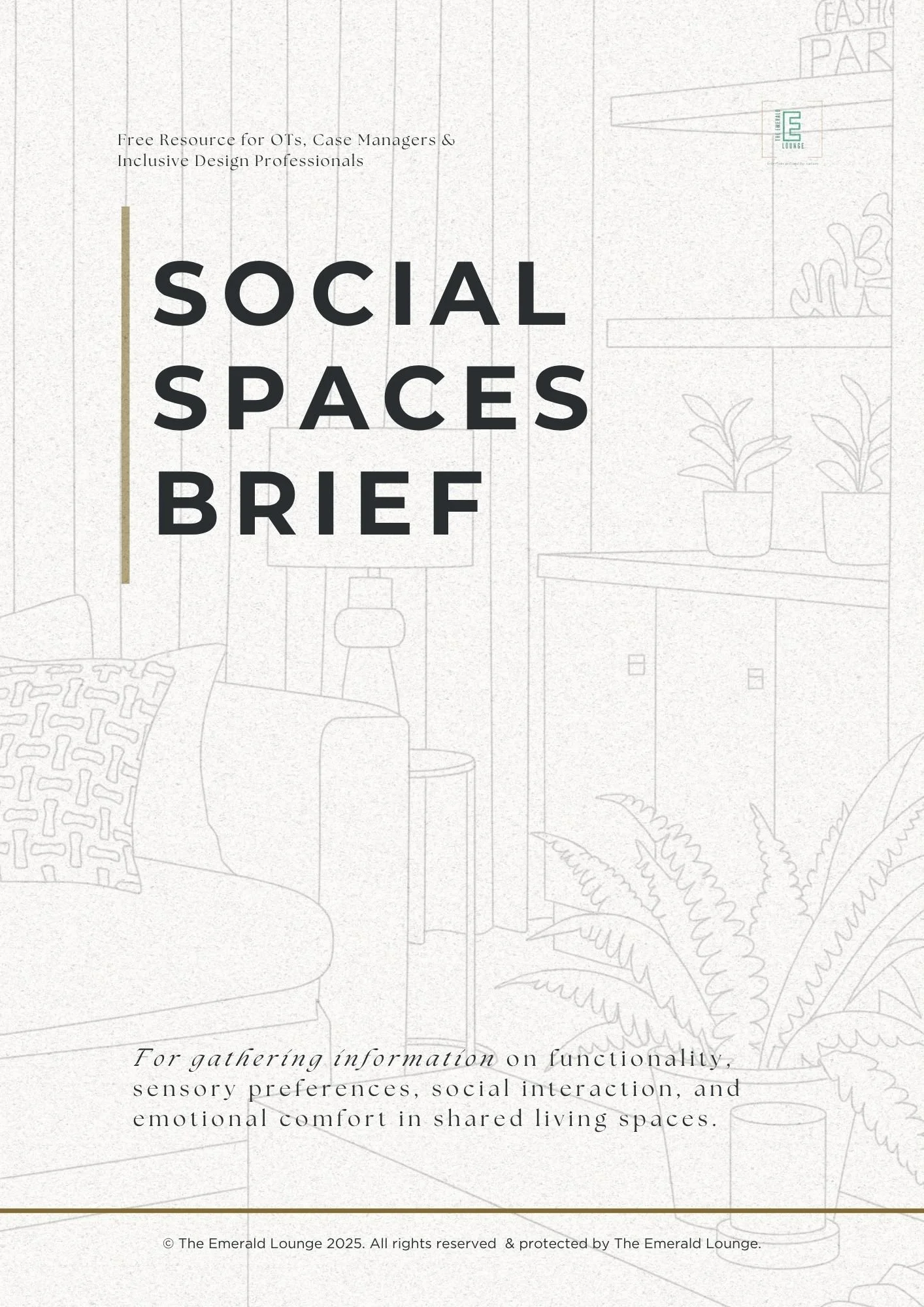
Supports:
balancing connection, rest, and independence
understanding how shared spaces are actually used
identifying sensory triggers and comfort levels
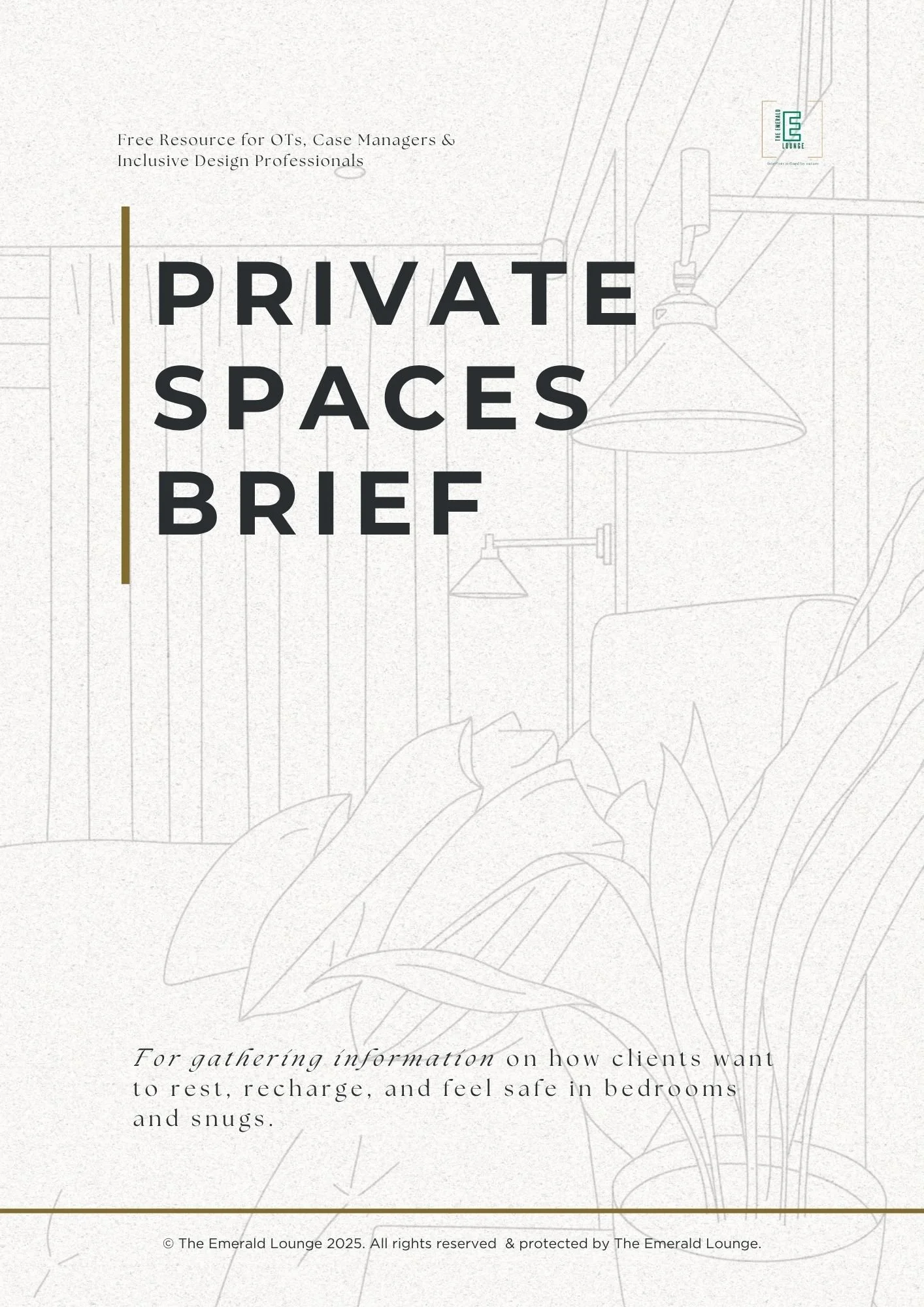
Supports:
rest, retreat, and emotional regulation
personal comfort and identity within the home
identifying sensory triggers and comfort levels
Together, this trilogy forms a structured way to move through a home, ensuring no important conversation is missed.
What does your home need to do for you on your most challenging day?
If these resources highlight areas where a space isn’t fully supporting your client, this is often the point where design input becomes valuable.
