
Inclusive & Collaborative
Projects
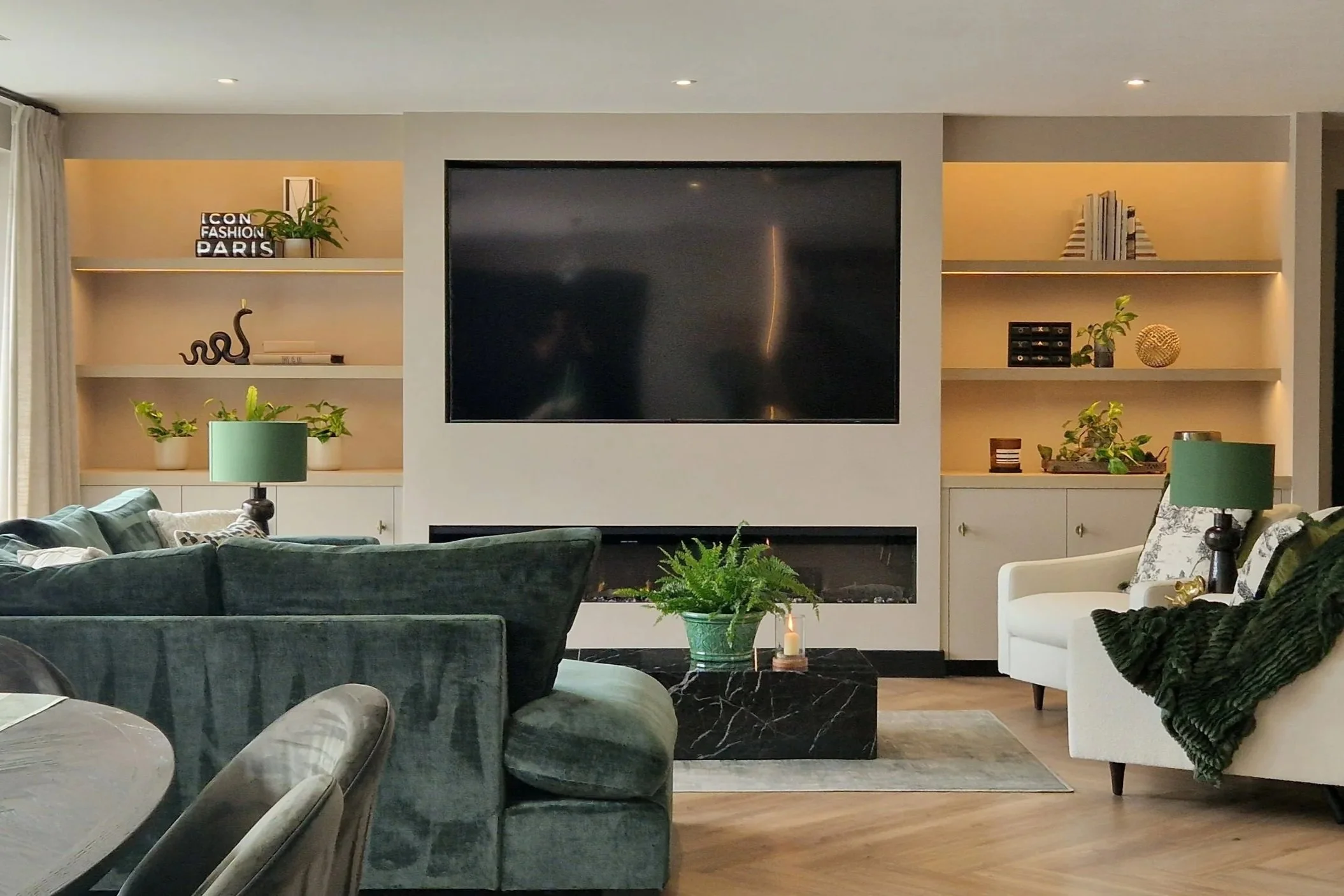
“I wish you were there at the first meeting because you don’t realise what you are saying “yes” to.
Your service was the best money we spent - you were a lifesaver!
You had a tricky job to navigate our very different personalities but you did it.””
FOR OCCUPATIONAL THERAPISTS
When you are working with a client on a complex adapted home, you are already carrying the clinical picture: the functional needs, the risks, the daily routines, the sensory profile. What can be harder to carry alone is the interior design conversation. The one that determines whether a home feels therapeutic and personal, or functional but cold.
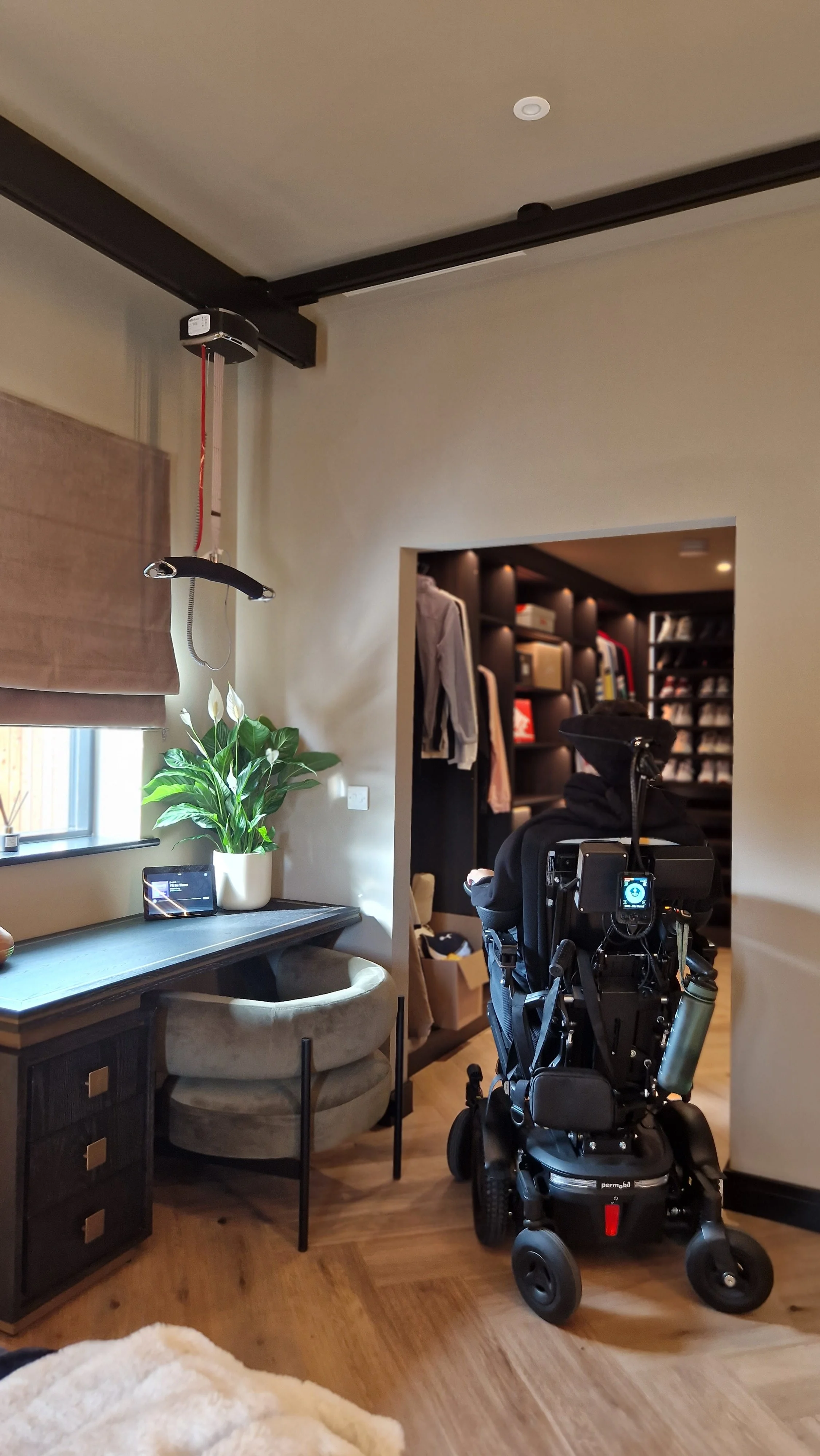
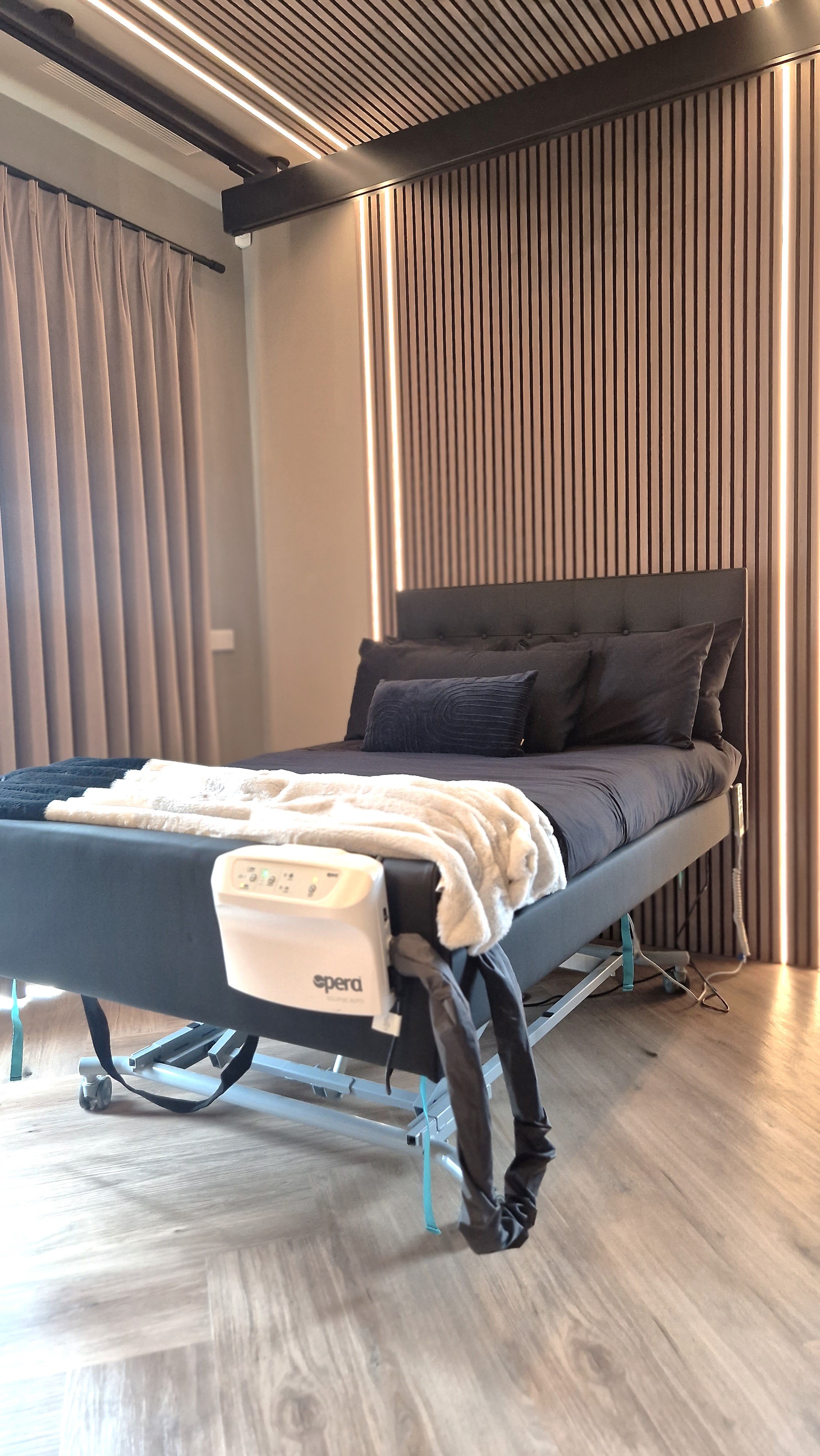
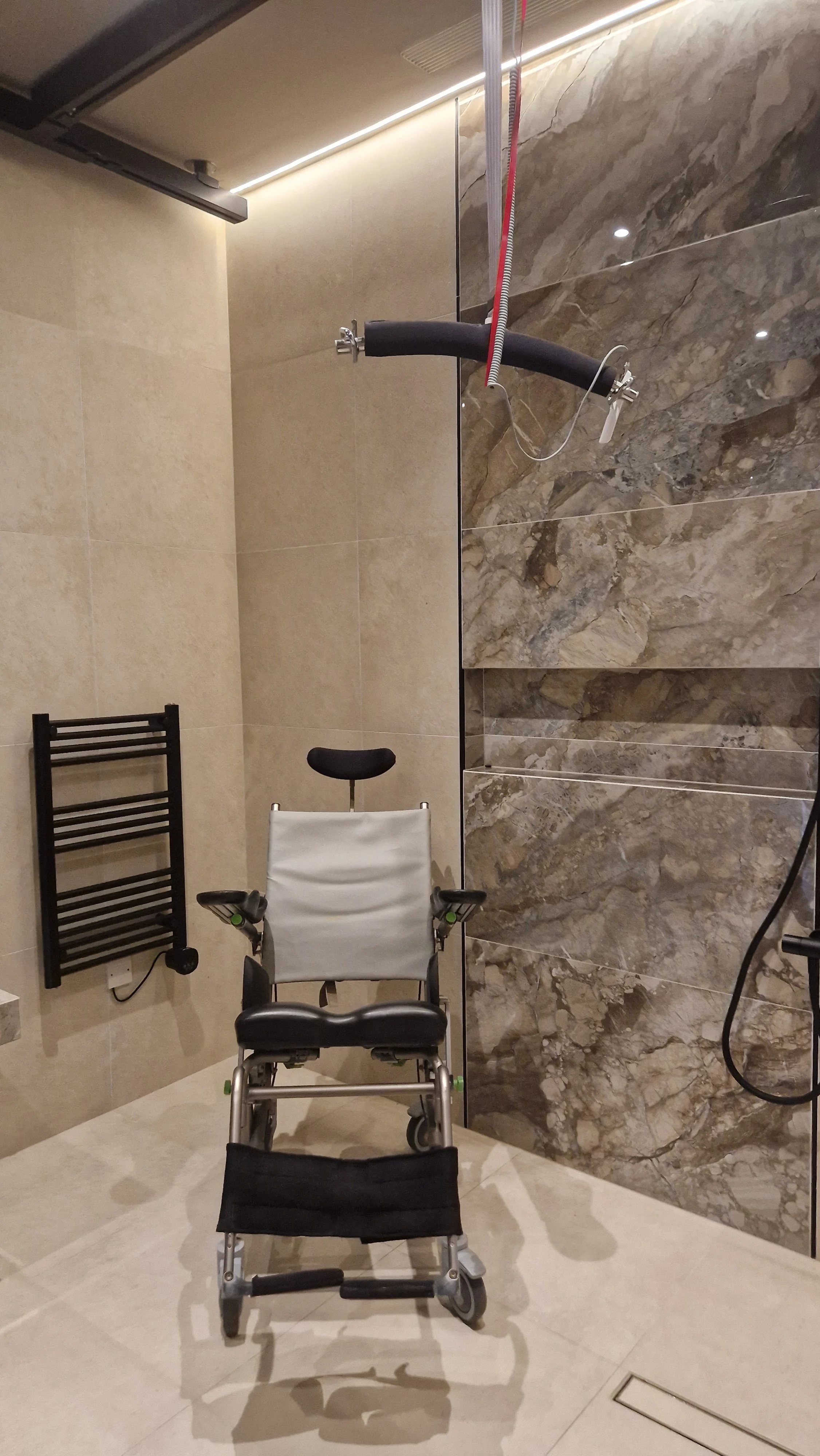
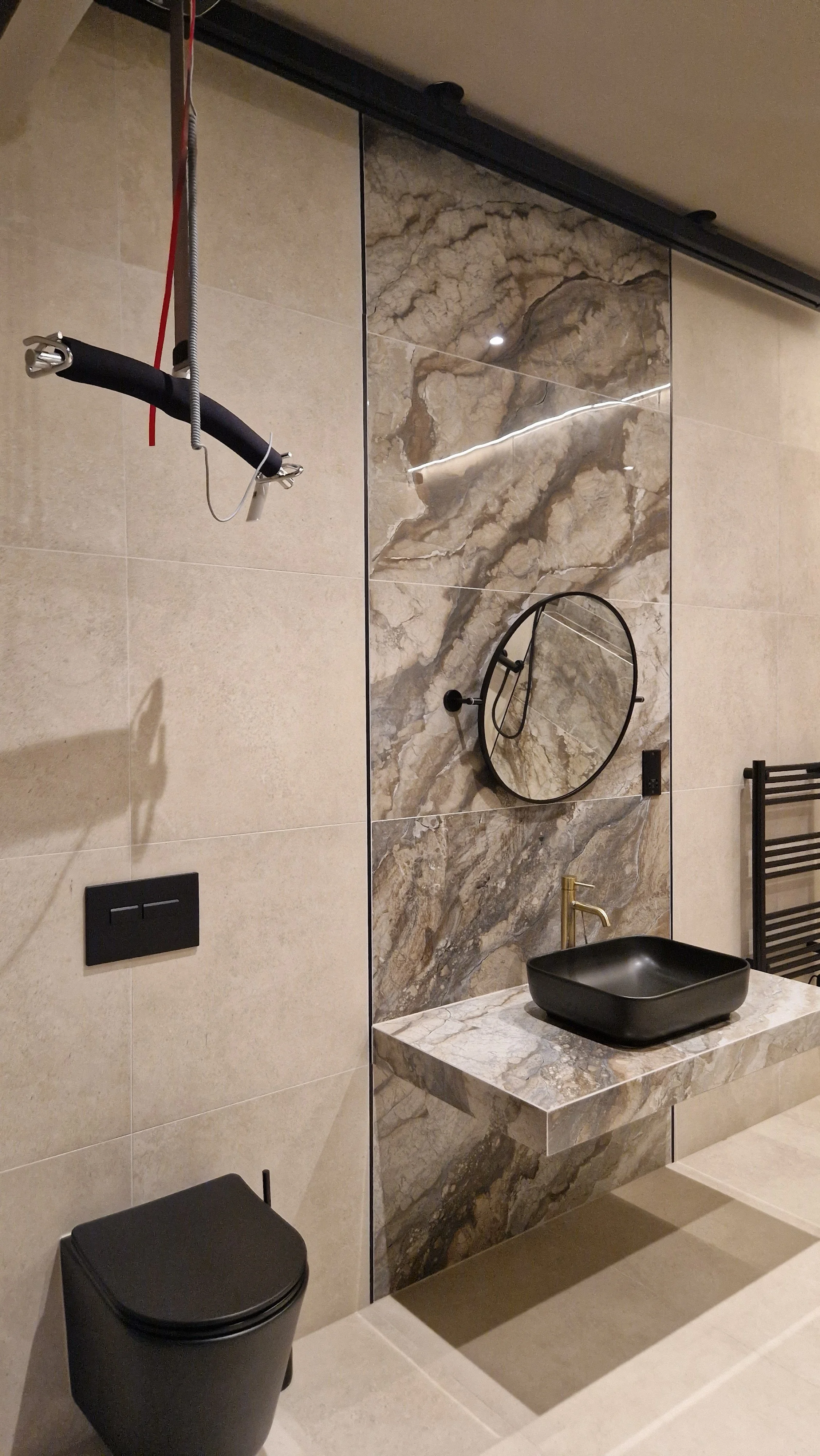
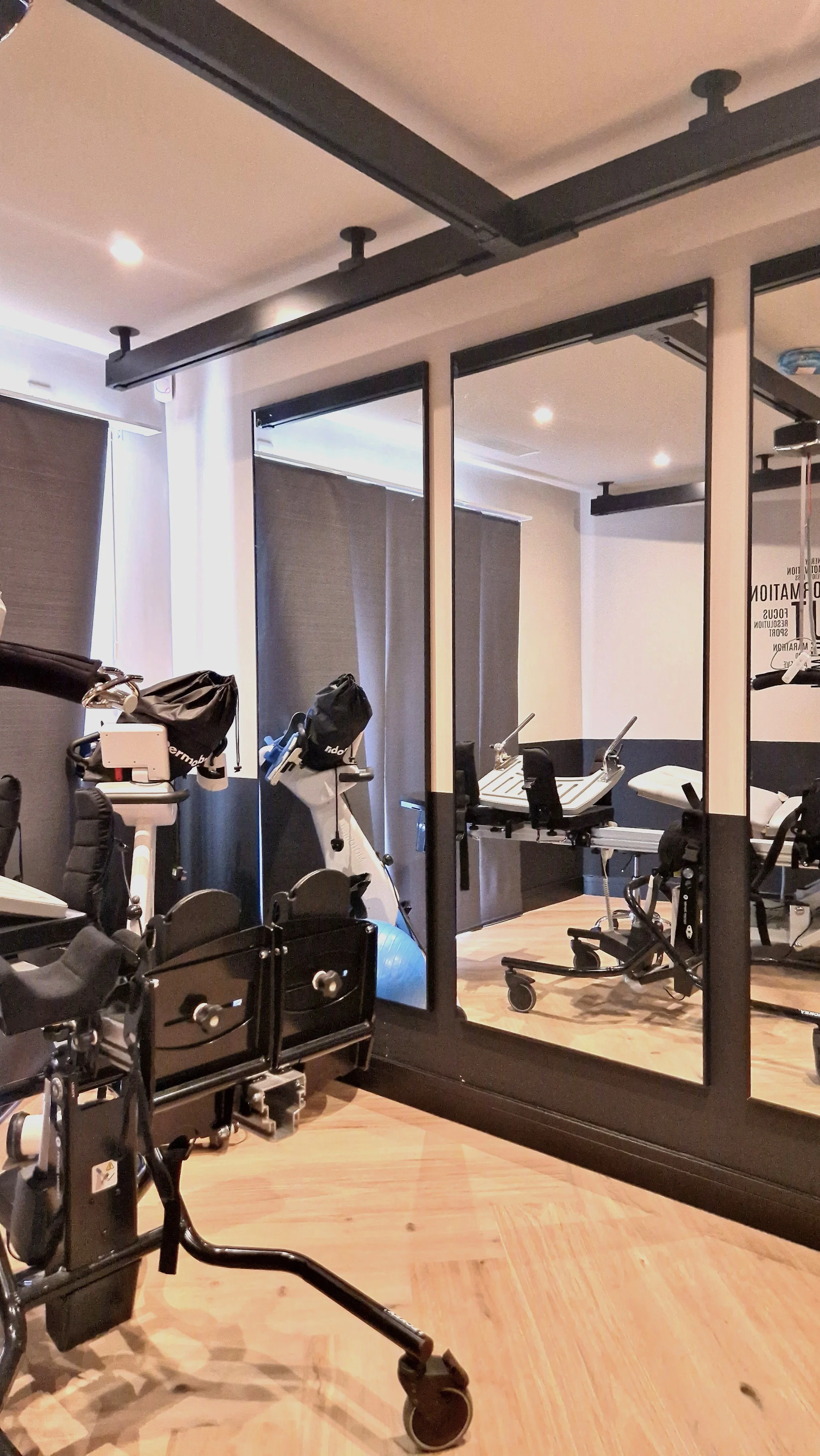
I work alongside occupational therapists, case managers, and specialist consultants on residential projects where accessibility and lived experience need to be fully integrated, not added as an afterthought. My role is to translate your clinical insight into a home that is easier to use and genuinely beautiful to live in.
The design decisions that matter most - spatial flow, lighting, material choices, colour, acoustic comfort — are made early. Getting the right design input at that stage makes everything that follows more coherent and far less costly to correct.
WHAT I BRING TO THIS
A nature-led, sensory-aware approach
All of my work is rooted in biophilic design: the understanding that human beings are fundamentally drawn to nature, and that environments shaped by natural materials, light, pattern, and order have a measurable effect on how we feel. In adapted homes, this is not simply an aesthetic preference; it becomes a meaningful design tool.
Nature helps us manage complexity. One of the principles I work with is the idea of complexity and order; the understanding that our brains are designed to find nature's level of detail engaging without becoming overwhelmed by it. A well-designed room holds the same balance: enough visual interest to feel alive and personal, not so much that it becomes tiring or confusing. This is as relevant for a client managing cognitive load as it is for a family navigating a busy shared space.
I also draw on the idea that our nervous systems are strongly influenced by our surroundings. Research in environmental psychology has long shown that access to natural elements, whether that is daylight, a view of greenery, or the warmth of natural materials underfoot, allows the brain to rest and recover more readily. In practice, this means I think carefully about every space through a sensory lens: what does this room need to do for this person on their most challenging day?
SENSORY DESIGN IN PRACTICE
No two people experience their home in the same way. It is proven that when brain activity is measured, some of us are energised by richness, variety, and strong sensory input. Others find the same environment depleting, even distressing. Most of us sit somewhere along that spectrum and our position can shift depending on health, mood, time of day, or the demands already placed on us.
This is not a matter of taste. It reflects how each person's nervous system is wired to process stimulation. Understanding that profile shapes every design decision I make.
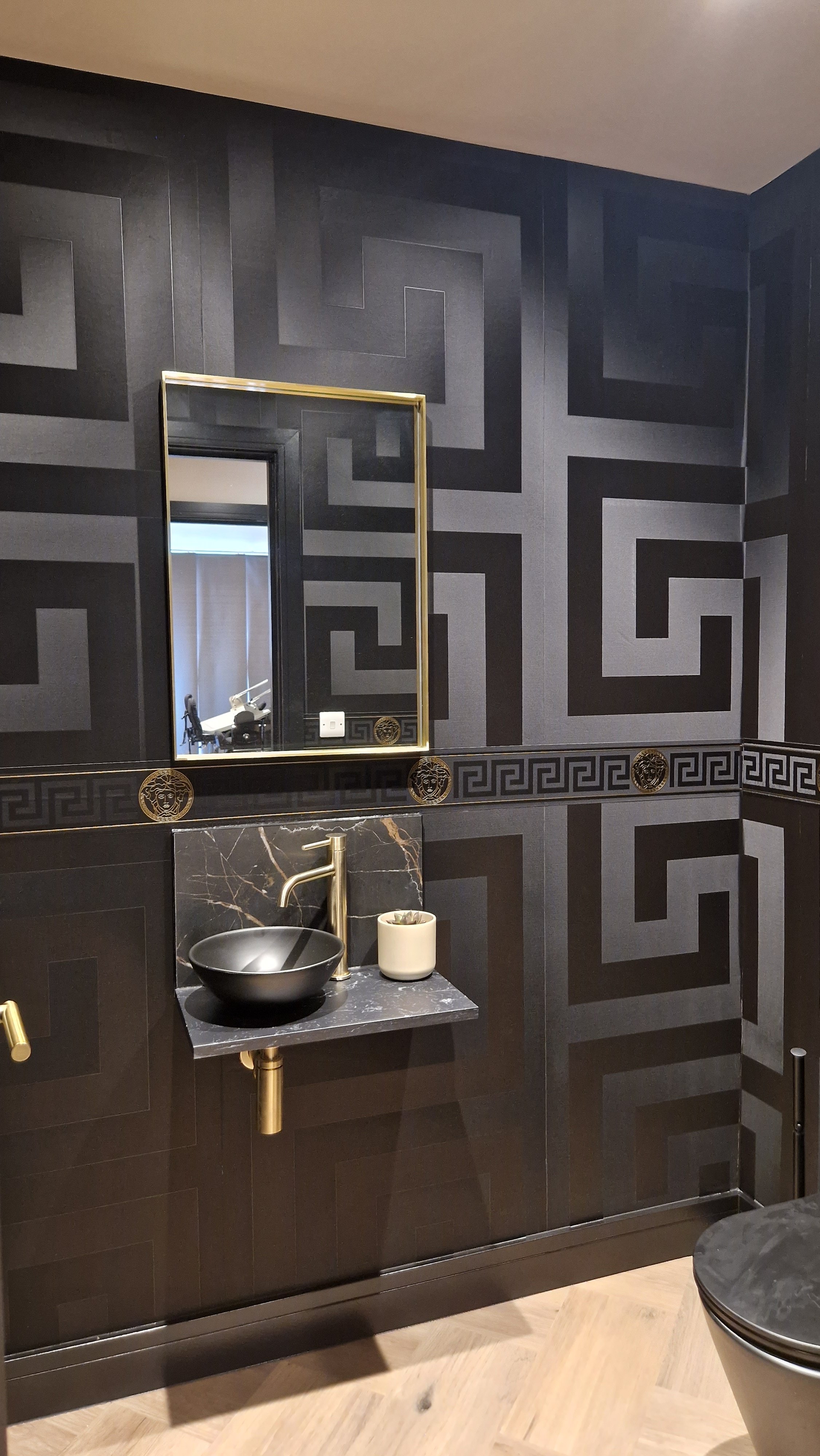
The low sensory profile Some people function best when their environment offers calm, order, and predictability. For someone with this profile, a busy room — layered patterns, unpredictable lighting, high visual contrast — is not just distracting; it can be genuinely tiring or anxiety-inducing. Spaces designed for a low sensory profile are refined and consistent: smooth textures, a flexible and unhurried palette, controlled lighting, layouts that are intuitive to navigate. There is still personality, still luxury, still a home that reflects who the person is. Low sensory design is not about removing stimulation. It is about creating a sensory landscape that feels safe, balanced, and manageable.
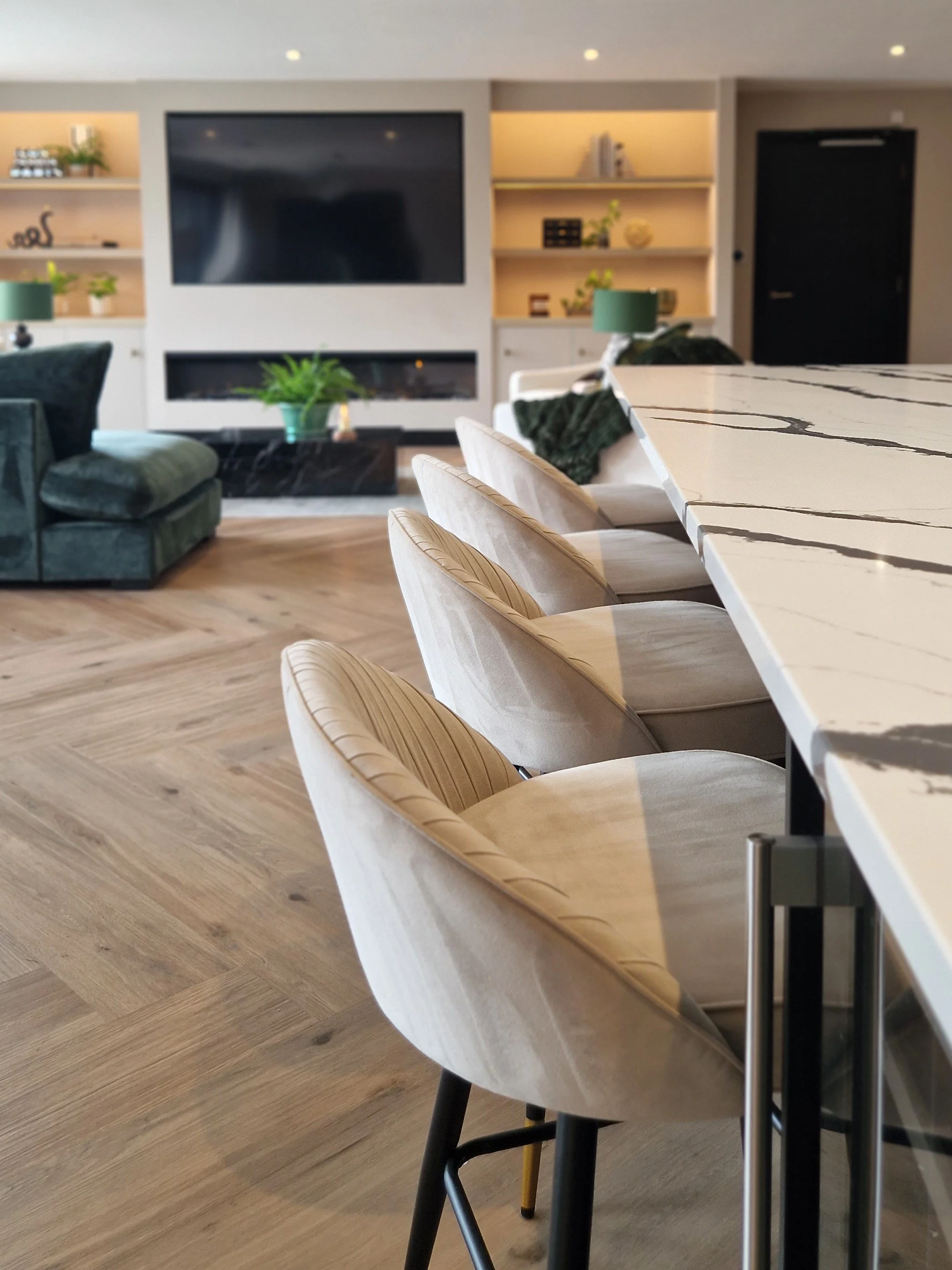
The medium sensory profile Many people — and most family homes — need to serve more than one sensory preference at once. A medium sensory approach introduces gentle visual engagement and tactile variety without tipping into overwhelm: moderate contrast, nature-inspired pattern, layered materials, acoustic balance. These are spaces that work for introverts and extroverts alike, that feel welcoming and alive without being demanding. This is often the right register for shared social spaces, where the home needs to hold different people comfortably at the same time.
The high sensory profile Some people are under-stimulated by quiet environments and need richness, contrast, and sensory depth to feel truly comfortable and themselves. For this profile, bold colour, expressive pattern, and immersive layering are not excess — they are the point. The design work here is about channelling that energy with intention: ensuring sound absorption, spatial organisation, and material choices mean the room feels purposeful and grounding rather than chaotic.
The goal across the whole home is the same: that every room does its job for the person in it, without asking the design to carry more sensory weight than it should.
HOW WE WORK TOGETHER
Complex projects work best when the right people are in the room from the start. I collaborate directly with the occupational therapist, the contractor, and where relevant, the architect or specialist consultant.
If you are an OT and would like to explore how we might work together on a current or upcoming project, I would welcome a conversation. I have also developed a set of free resources designed specifically to support your design conversations with clients — including sensory profile tools, space-by-space briefs, and a biophilic design guide written for clinical practitioners.
WHAT THIS INCLUDES
Collaboration with occupational therapists, contractors, and specialist consultants
Sensory-aware spatial planning calibrated to the individual
Accessible layouts integrated into the overall design — not retrofitted
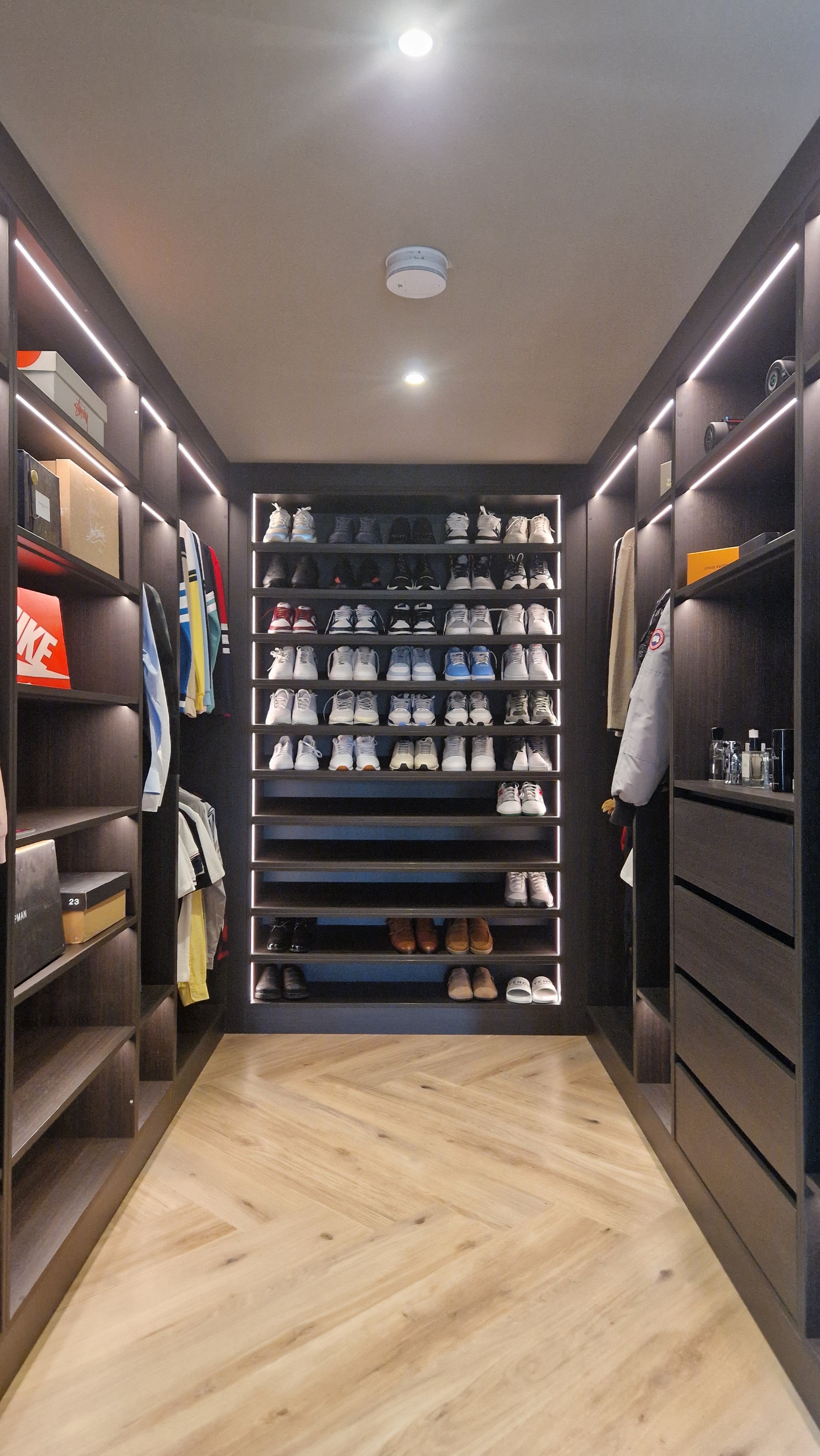
Material and colour specification for comfort, clarity, and dignity
Lighting strategies that support different needs, activities, and times of day
Acoustic consideration across all rooms
Full interior specification provided to contractors with build confidence
Site visits and contractor liaison throughout
WHO IS THIS FOR
This service is for clients navigating a comprehensive residential project where disability, injury, neurological difference, or age-related change needs to be thoughtfully integrated into the design from the beginning.
It is also for the families and loved ones who are helping to make that happen — and who want the end result to feel like a home that reflects the person living in it, not a facility designed around their needs.
Projects may be new builds, whole-home renovations, extensions, or significant adaptations. They are almost always complex, often multi-disciplinary, and always personal.
THE OUTCOME
A home that supports independence, confidence, and comfort — where the design decisions that were made carefully at the start are felt in the ease of every day that follows.
Beautiful, resolved, and entirely theirs.
For occupational therapists and referrers: If you are working on a project where design input would strengthen the outcome, I would welcome a conversation about how we might collaborate.
For homeowners: If you have been referred to this page or are navigating a complex project and would like to discuss whether this approach is right for you: